

A Parent's Guide to Tahseen
Empower Your Child with Daily Recitations
Encourage your kids to take advantage of the powerful benefits of recitating Surahs Al-Ikhlas, Al-Falaq, and An-Nas daily. Learn how these chapters can offer protection and peace of mind.
At digiTIES, these are among the first Surahs teachers go over with students in Qur'an class - no matter what grade they are in. We focus on mastering proper tilawah.
Step-by-Step Guide
Follow these steps to ensure your child gains the full protective benefits of reciting these verses (aka: al-Mu^awwidhat)
1
Step 1:
Do as the Prophet did:
Holding your palms together facing upwards.
Recite into your palms each of the three Surahs (one time each) in order: Al-Ikhlas, Al-Falaq, and An-Nas.
2
Step 2:
Blow softly (three times) with some breath into your palms النفث.
The blessings of the recitation is transfered to your palms.
3
Step 3
Then wipe your palms over your head and face and what you can from the rest of your body. This spreads the barakah over your body.
4
Step 4
Repeat this process two more times, blowing softly with breath and wiping in between rotations - for a total of three rounds.
Looking for a reliable reference for tafseer?
The Power of Daily Recitation
Why Reciting the Surahs Matters
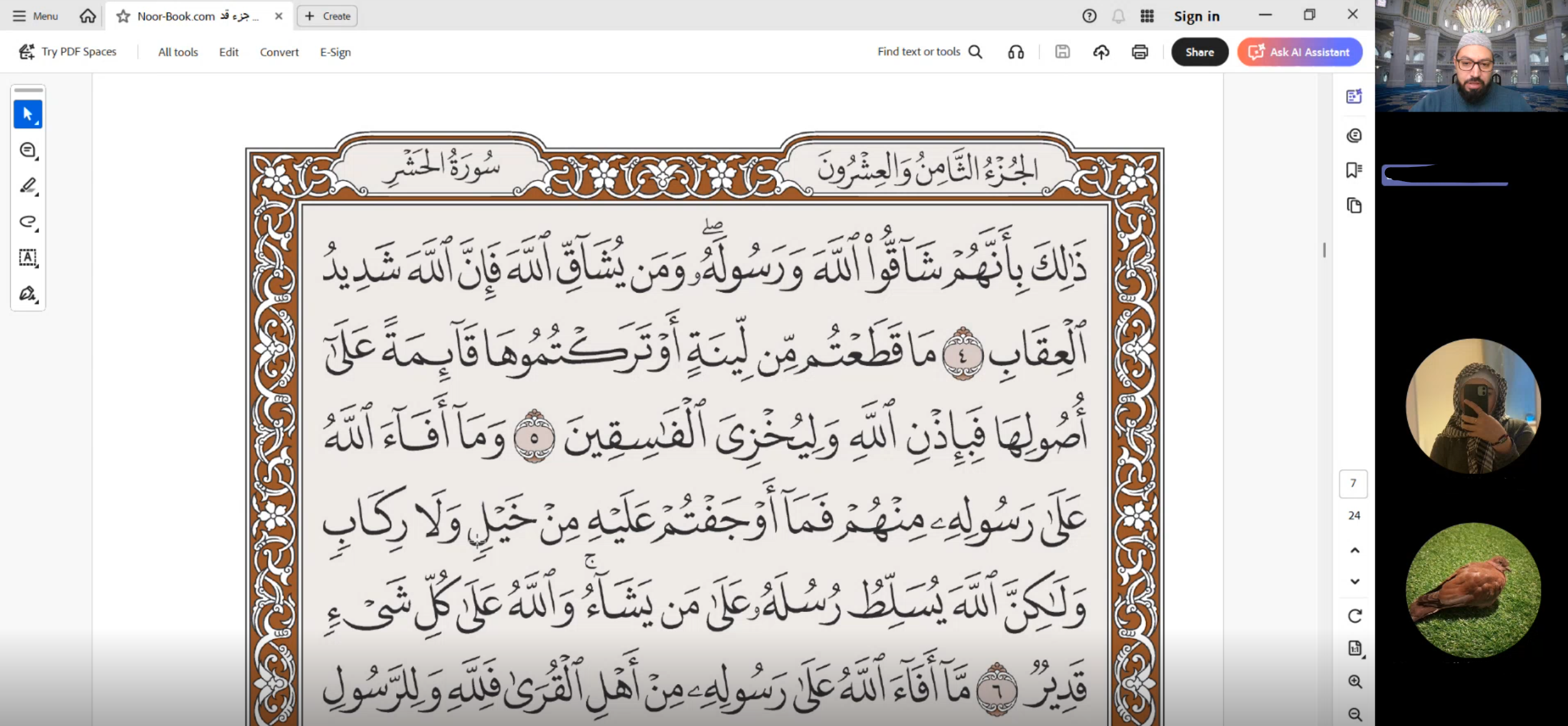
Reading Surahs Al-Ikhlas, Al-Falaq, and An-Nas properly (following the rules of Tajweed) is an important habit to get into. Prophet Muhammad ﷺ guided his nationt to recite these surahs daily - when a person wakes up and in the evening. The times for recitation is at fajir and up to three hours after, and at sunset (Maghrib) and up to three hours after. These Surahs act as a shield, as was narrated in the hadith:
Looking for reliable resources ?
Following in the tradition:
:قال رسول الله صلى الله عليه وسلم
قل ﴿قل هو الله أحد﴾ والمعوذتين حين تمسي وحين تصبح يكفيك من كل شيء
رواه أبو داود والترمذي والنسائي
The Prophet ﷺ said what means:
Recite قل هو الله احد and the two mu^awidhat (Surat Al-Falaq and Surah An-Nas) before you sleep and when you wake up, it suffices to protect you from all harm.
Narrated by Abu Dawud, At-Tirmidhiyy, and An-Nasa'iyy